Why two identical cars aren't worth the same in wholesale?
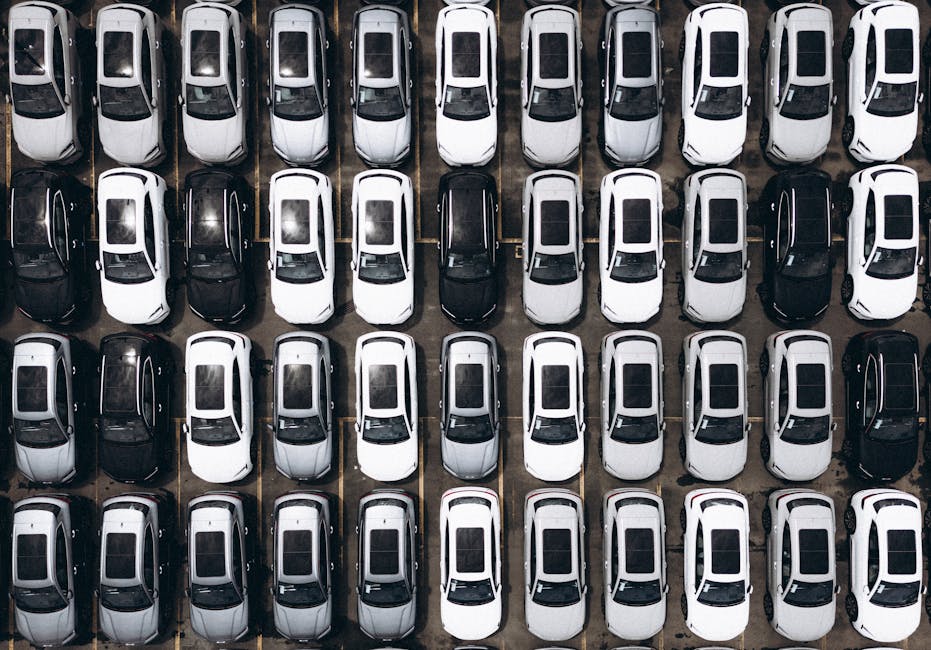
Two identical-looking trades can be worth a thousand dollars apart to a wholesaler, and a big reason is hiding in the first character of the VIN.
Short version: the first digit of a VIN tells you where the car was built. Right now, where a used car was built decides whether it can cross into the US cheaply, and that changes what an export wholesaler will pay for it. Same year, same trim, same kilometres. One VIN starts with a 1, the other with a 3, and the offers come back thousands, if not tens of thousands, apart.
I’ve watched two units that looked like twins on the appraisal sheet get very different numbers back, and the salesperson never understood why. It’s not magic and it’s not the wholesaler being difficult. It’s the VIN. Let me save you the headache, because once you see it you can’t un-see it.
The first character of the VIN tells you where the car was born
Every VIN since 1981 follows the same standard (ISO 3779, the one NHTSA enforces). The first three characters are the World Manufacturer Identifier, and the very first one is the country of origin: where the car was actually assembled, not the badge on the grille.
The ones you’ll see most on a Canadian lot:
- 1, 4, 5: built in the United States
- 2: built in Canada
- 3: built in Mexico
- J is Japan, K is Korea, W is Germany, and so on down the alphabet
This is why a Canadian-built Toyota reads 2T and a US-built one reads 4T. Same car to your customer. Not the same car to a wholesaler who’s paying attention. You can confirm any VIN’s origin with the free NHTSA decoder.
Duty follows where it was built, not where you ship it from

Here’s the part that trips people up. When a vehicle crosses into the US, the duty is based on the country of origin (where it was manufactured), not the country you’re shipping it from. A used car sitting on a Canadian dealer’s lot that was built in Mexico is, for customs purposes, a Mexican car. It doesn’t matter that it’s spent its whole life in Canada.
And as of April 2025, the US put a 25% tariff on imported automobiles under Section 232. The official line is on the US Customs and Border Protection FAQ, and Congress has its own plain-language rundown in the CRS brief. A US-built unit (VIN 1, 4, or 5) is treated as US-origin and effectively walks across. A non-US unit gets hit, unless it qualifies under the USMCA exemption, and getting that validation on a used car is its own special kind of paperwork hell. Canada’s own Trade Commissioner Service walks through what qualifies.
Why a US-built unit is worth more to an export wholesaler
A big chunk of your wholesale buyers aren’t keeping the car. They’re moving it, and a lot of them move it south. So put yourself in their seat.

A VIN-1 unit crosses the border clean. No 25% surprise, no validation scramble. They know their landed cost to the dollar, so they can bid you a real number with confidence.
A VIN-3 unit? Now they’re pricing in a tariff that might be 25%, or might be zero if they can prove origin, on a used car where that proof is a pain to get. When a buyer doesn’t know their cost, they protect themselves the only way they can: they bid light. That gap, the “I don’t know what this is going to cost me so I’ll knock a grand off to be safe” gap, comes straight out of your trade.
And some buyers don’t bid light. They don’t bid at all. Plenty of export-focused wholesalers just skip anything that isn’t US-built, because the tariff math isn’t worth the headache to them. That’s worse than a soft offer. It’s one fewer bidder on your unit, and fewer bidders means less competition, which means the best number you get is lower. A non-US unit doesn’t just attract weaker bids. It attracts fewer of them.
This is what I mean when I say country of origin can swing the price by thousands, and most appraisal tools ignore it completely. They’ll show you a clean book value and a tidy comp set and not one of them reads the first digit of the VIN. You’re handing the customer a number built on a car that doesn’t exist.
This is also why auction comps are lying to you right now
The standard move is to price a trade off recent auction sales of the “same” vehicle. The problem is that the auction lane doesn’t sort by country of origin, and right now the tariff picture is changing month to month. So last week’s sale of a “comparable” unit might have been a VIN-1 that crossed clean, and the one in front of you is a VIN-3 that won’t. Same line in the report, completely different economics.
Honestly, this is the whole reason I think auctions are close to useless for pricing at the moment. The market’s too volatile (US export demand, recall rules that can suddenly make a vehicle un-exportable) to trust a number from a sale that already happened. A comp from two weeks ago in a market that moves this fast isn’t data. It’s a guess wearing a tie.
What this actually means when you’re appraising a trade
You don’t need to become a customs broker. You need three things to be true.
- Read the first digit of the VIN before you commit to a number. Five seconds. It’s the cheapest piece of due diligence in the whole walk-around.
- Price the real car, origin included. Not the generic book value for “a 2022 whatever.”
- Let the buyers who’d actually pay for it tell you what it’s worth. The honest number for a unit isn’t a comp from the past; it’s a live bid from a wholesaler who wants this car and knows what it’ll cost them to move it. (This, by the way, is exactly why we built the comparables side of Vehicle Fair Trade: manually web-shopping comps and squinting at trims never accounted for stuff like origin, and it’s a miserable way to spend your afternoon.)

Now, the honest “this isn’t for you” part: if you retail every trade you take and never wholesale or export, the origin gap matters a lot less to you. Keep doing what works. And to be clear, no tool, ours included, makes a Mexican-built unit worth more than it’s worth. It can’t change the tariff. What it can do is make sure you and your buyers are pricing the actual car, VIN and all, instead of a hopeful average, so you stop leaving money on units you didn’t know were worth more.
FAQ
What does the first number of a VIN mean?
It’s the country of origin, the place where the vehicle was assembled. 1, 4, and 5 mean the United States; 2 means Canada; 3 means Mexico; letters like J, K, and W mean Japan, Korea, and Germany. It’s part of the World Manufacturer Identifier that’s been standard since 1981.
Are US-built used cars worth more in Canada right now?
To a wholesaler who exports to the US, often yes. A US-origin unit (VIN 1, 4, or 5) can cross the border without the 25% Section 232 tariff, so the buyer knows their cost and can bid stronger. A non-US unit carries tariff uncertainty, and some export buyers won’t bid on it at all.
Does the US tariff apply to used cars, not just new ones?
The Section 232 duty is assessed on the imported vehicle by country of origin; it isn’t limited to brand-new cars. Used units crossing the border are classified the same way. Always confirm a specific case with a licensed customs broker, because the rules have been changing through 2025 and 2026.
Does where a car is built actually change its value, or just its tariff?
Both, indirectly. The tariff changes the landed cost for any buyer who moves the car across the border, and that buyer prices that cost into their bid. So origin doesn’t change what the car is, but it absolutely changes what someone will pay for it.
My trade was built in Mexico but it’s a Canadian car. Doesn’t USMCA make it duty-free?
It can, if the vehicle qualifies and you can produce the origin validation the importer needs. On a used car that documentation is notoriously hard to get, which is why many export buyers won’t count on it and bid as if the tariff applies.
How do I check where a specific car was built?
Read the first character of the VIN, or run it through the free NHTSA VIN decoder. For anything you’re about to wholesale or export, it’s worth the thirty seconds.
That’s the short of it: same-looking trades, different VINs, different money. Read the first digit, price the real car, and let real buyers tell you the real number. Do that and you’ll stop quietly giving away the units that were worth more all along.
P-A from VFT